
Affiliate Disclosure: We may earn a commission when you click on links to products on this page. As an Amazon Associate, we earn from qualifying purchases. This does not affect our recommendations — every product is selected based on published specifications, customer reviews, availability, and use-case fit.
What size solar pool heater do I need? Your solar collector area should be 50–100% of your pool’s surface area. For a 15-foot round above-ground pool (177 sq ft surface), you need 89–177 sq ft of collector panels — typically 2–4 panels at 40 sq ft each.
Why Trust Our Pool Heater Picks?
We’ve researched the most popular solar pool heaters for above-ground pools, comparing them on heating capacity (BTU output), panel surface area, build quality, installation requirements, customer satisfaction, and price-to-performance value. Our selections are updated for the 2026 season.
Best Solar Heaters for Above-Ground Pools (2026)
Product listings and stock change often. When an exact item is unavailable, use the Amazon search link to verify the current model, seller, and warranty before buying.
| Heater | Panel Size | Max Pool Size | Best For |
|---|---|---|---|
| SmartPool S220 Search Amazon |
2? x 20? (40 sq ft) | Up to 10,000 gallons (in-ground); up to 15? round above-ground | Small to medium above-ground pools, budget-friendly option |
| SmartPool S330P Search Amazon |
4? x 10? (40 sq ft) | Up to 15,000 gallons | Medium above-ground pools, easy DIY installation |
| GAME 4721 SolarPRO Search Amazon |
2? x 20? (40 sq ft) | Up to 15,000 gallons | Curved/odd-shaped pools, quick-connect fittings |
| XtremepowerUS 4’x20? Search Amazon |
4? x 20? (80 sq ft) | Up to 20,000 gallons | Large above-ground pools, maximum heat output |
| SunHeater S120U Search Amazon |
2? x 20? (40 sq ft) | Up to 12,000 gallons | Universal fit, good mid-range option |
How Solar Pool Heaters Work
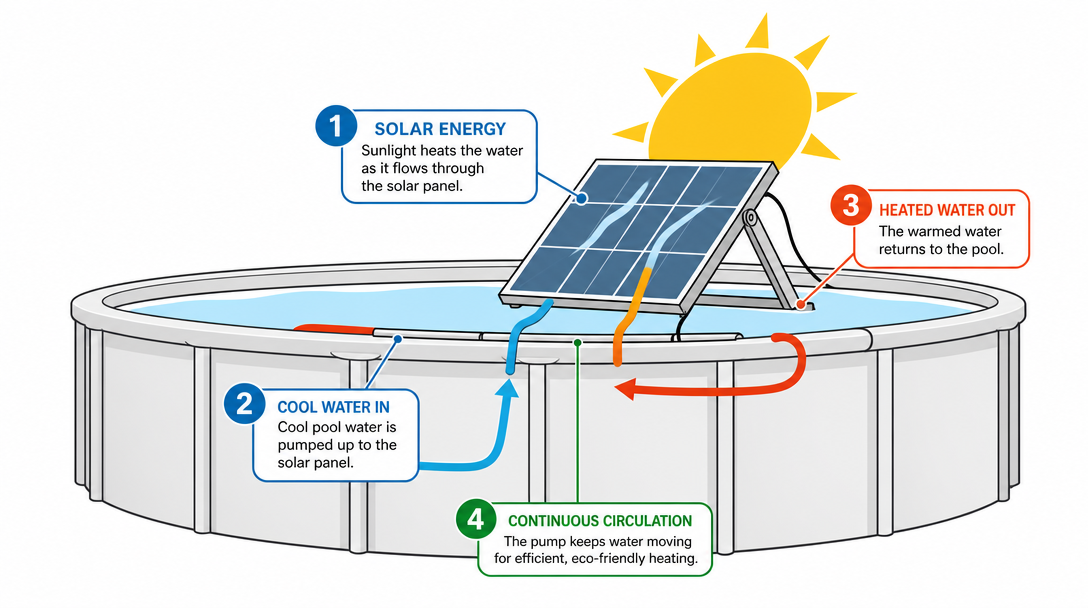
Solar pool heaters are surprisingly simple: pool water is pumped through a series of black tubes or panels that absorb sunlight and transfer heat to the water as it passes through. The warmed water then returns to your pool. It’s the same principle as leaving a garden hose in the sun — just much more efficient.
Key components:
- Solar collector panels: The black mat/tube array that captures solar energy. Typically made of polypropylene or EPDM rubber.
- Diverter valve: Routes pool water through the solar panels when heating is needed, or bypasses them when not.
- Check valve: Prevents water from draining back through the system when the pump is off.
- Mounting kit: Hardware to secure panels on a roof, rack, or ground surface.
Sizing Guide: How Much Heater Do You Need?
The golden rule: your solar collector surface area should equal 50–100% of your pool’s surface area for effective heating. For example:
| Pool Size (round) | Pool Surface Area | Recommended Collector Area | Heater Panels Needed |
|---|---|---|---|
| 12? diameter | 113 sq ft | 57–113 sq ft | 2–3 panels (2’x20?) |
| 15? diameter | 177 sq ft | 89–177 sq ft | 3–4 panels (2’x20?) |
| 18? diameter | 254 sq ft | 127–254 sq ft | 4–6 panels (2’x20?) |
| 21? diameter | 346 sq ft | 173–346 sq ft | 5–8 panels (2’x20?) |
| 24? diameter | 452 sq ft | 226–452 sq ft | 6–11 panels (2’x20?) |
Note: These are guidelines for extending your swim season by 2–4 weeks in spring and fall in average US climates. Full-season heating in cooler regions requires 100%+ coverage and may need a pool cover to retain heat overnight.
Installation Tips
- Optimal placement: Mount panels facing south (in the Northern Hemisphere) at an angle roughly equal to your latitude. Ground-mounted racks work well for above-ground pools and are easier to install than roof mounts.
- Use a solar blanket: A pool cover or solar blanket at night is the single most effective way to retain the heat your solar panels collected during the day. Without one, you can lose 50–70% of your heat gain overnight.
- Plumb the bypass: Install a 3-way diverter valve so you can bypass the solar panels when the pool is warm enough or when you need to winterize.
- Check your pump: Most above-ground pool pumps can handle the additional flow resistance of solar panels. If your flow rate drops noticeably, you may need a booster pump.
- Winterize properly: Drain all water from the panels before freezing temperatures to prevent cracking. Disconnect and store panels indoors or drain them completely.
Solar vs Gas vs Heat Pump: Quick Comparison
| Heater Type | Upfront Cost | Operating Cost | Best For | Lifespan |
|---|---|---|---|---|
| Solar | $200–$600 | ~$0 (free sun) | Extending swim season, eco-friendly | 10–20 years |
| Gas | $1,500–$3,500 | $200–$500/month | Quick heating, spas, year-round use | 5–10 years |
| Heat Pump | $2,000–$4,000 | $50–$150/month (electric) | Efficient heating in mild climates | 10–15 years |
For most above-ground pool owners, a solar heater paired with a pool cover delivers the best bang for the buck — negligible operating costs and a simple DIY installation that pays for itself in one season compared to gas heating.
Frequently Asked Questions
How much warmer will a solar heater make my pool?
A properly sized solar system can raise pool temperature by 10–15°F above the unheated water temperature. With a solar blanket, this gain can be maintained. In sunny climates, expect water in the 78–85°F range during the swim season.
Can I install a solar pool heater myself?
Yes — above-ground pool solar heaters are designed for DIY installation. Most kits include flexible hoses with hose clamps, mounting brackets, and clear instructions. Typical install time: 2–4 hours for a single-panel system. Roof mounting is more complex and may require professional help.
Do solar pool heaters work on cloudy days?
They work, but at reduced efficiency. Solar panels still collect diffuse sunlight on partly cloudy days (typically 25–50% of full-sun output). On heavily overcast days, heating will be minimal. This is why slightly oversizing your collector area is often recommended.
How long do solar pool panels last?
Quality polypropylene panels typically last 10–20 years with proper care. The main failure points are freeze damage (if not drained for winter) and UV degradation of the plastic over very long periods. EPDM rubber models may have slightly longer lifespans.
Can I connect multiple panels together?
Yes — most panels are designed to be connected in series using standard hose fittings. The kits above are single panels, but you can purchase additional units of the same model and daisy-chain them for more heating capacity.
How much does a solar pool heater cost?
A solar pool heater system typically costs $200–$600 for the panels and mounting hardware for an above-ground pool. Professional installation adds $200–$500. Compared to gas heaters ($1,500–$3,000 installed) or heat pumps ($2,500–$5,000), solar is the most affordable upfront option with zero ongoing fuel costs.
Will a solar heater work in cold climates?
Solar pool heaters work best in sunny climates with at least 5–6 hours of direct sunlight. In cooler northern climates (USDA zones 3–5), they can extend the swimming season by 4–8 weeks but may not maintain comfortable temperatures during cold snaps. A solar blanket paired with the heater improves heat retention significantly.
Our Research Methodology
We evaluated these solar pool heaters based on published specifications (panel dimensions, recommended pool size, materials), verified customer reviews from multiple retail platforms, warranty terms, price-to-coverage-area value, and installation complexity. Product availability and pricing were verified as of mid-2026. We have researched and compared these products but have not personally installed every model listed.
Related Resources
- Solar Backup Sizing Calculator — Calculate energy needs for any solar project
- Solar Backup Buyer’s Checklist — subscribe to our newsletter on the home page to get the free report.
- Buyer’s Guides Hub — More solar product comparisons and recommendations
- Complete Solar Pool Heater Guide — In-depth article covering all pool heater types
Last updated: July 2026. Product links include our Amazon Associate tag (alternativ0bb-20). Prices and availability may change — always verify before purchasing.
