
Quick verdict: Solar lights handle weather better than most people expect. Cold temperatures actually help LED and battery efficiency. The real threats are prolonged heavy snow covering the panel, water leaking into a low-IP-rated housing, and physical damage from hail or falling branches. If you buy lights rated IP65 or higher and keep the panels clear, your solar lights will survive nearly anything short of a hurricane.
Quick answer: Cold weather does not hurt solar lights — it can actually help. Heat, on the other hand, shortens battery life. Rain is fine if the light is rated IP65+. Snow is only a problem when it completely covers the solar panel. Wind and hail can physically break cheap plastic housings. Buy quality, and most weather is a non-issue.
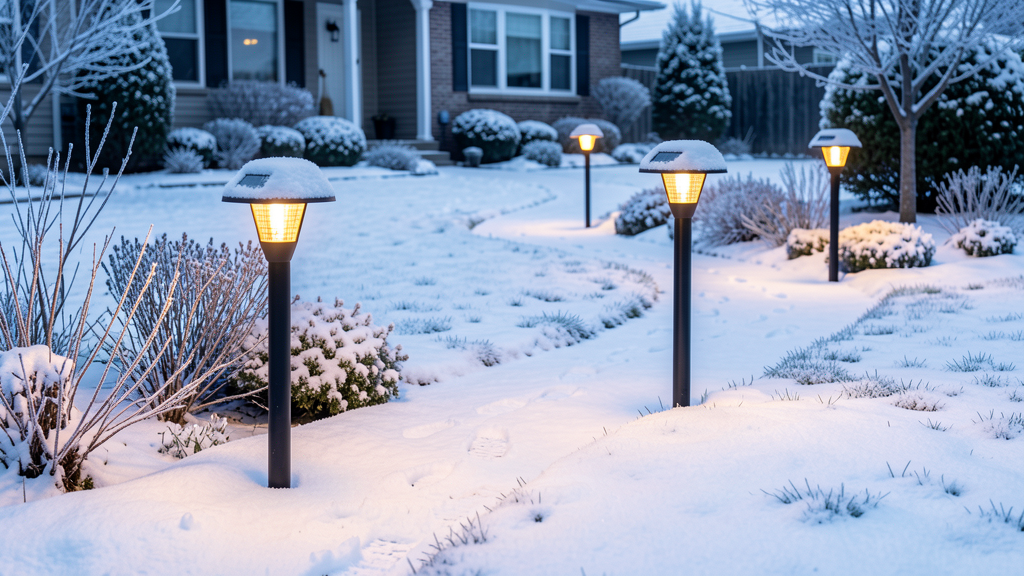
The honest truth about solar lights and weather
A lot of solar light marketing makes it sound like you need “winter-ready” or “storm-proof” models. In reality, the basic technology — a solar panel, a rechargeable battery, and an LED — is inherently weather-tolerant. LEDs do not care about cold. Solar panels actually produce more voltage in cold temperatures. The battery is the only component that is meaningfully temperature-sensitive, and modern NiMH and lithium cells handle a wide range.
Where solar lights fail in extreme weather is almost always one of three things:
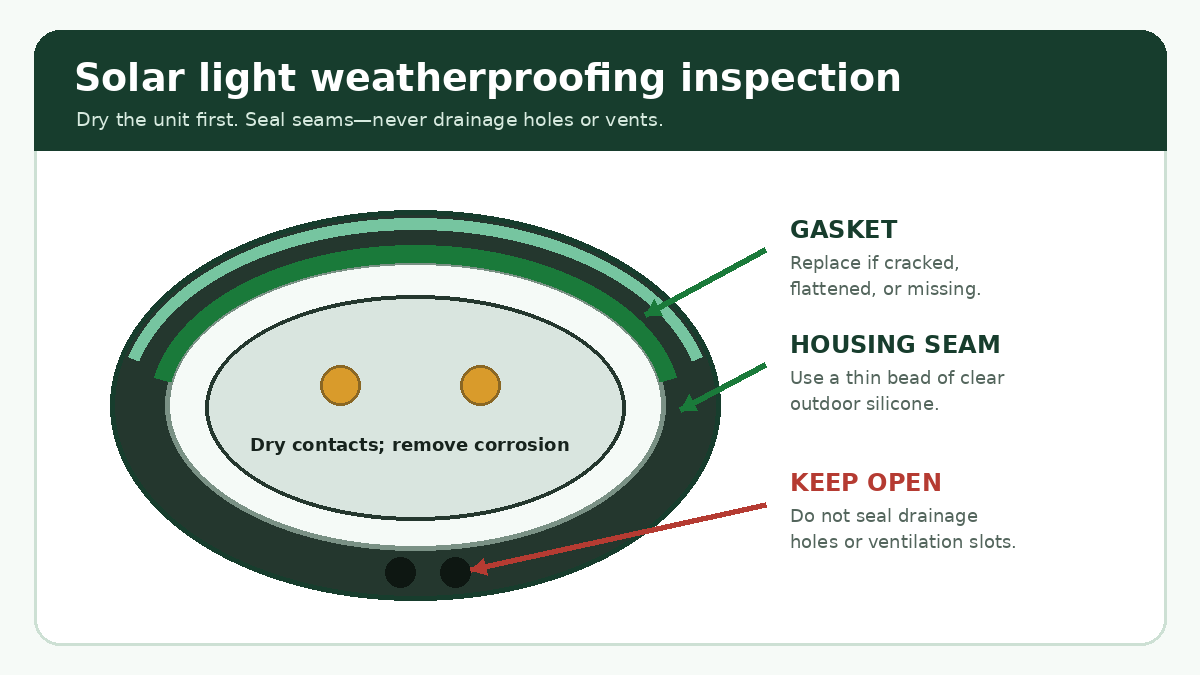
- Water gets inside. Cheap housings with poor seals let moisture corrode the circuit board and battery contacts.
- The solar panel gets covered. Snow, ice, heavy pollen, or debris blocks sunlight and the light cannot charge.
- Physical damage. Hail cracks the panel or housing. Wind knocks the light over or snaps the mounting stake. Falling branches break things.
Let us walk through each major weather condition and what it actually does to your solar lights.
Cold weather and freezing temperatures
This is the most misunderstood topic in solar lighting. Cold temperatures do not damage solar lights. In fact:
- LEDs are more efficient in cold. LED output increases slightly as temperature drops — the opposite of what most people assume.
- Solar panels produce more voltage in cold. A panel at 0 °C can produce 5–10% more peak power than the same panel at 35 °C.
- NiMH batteries work down to about ?20 °C. They lose some capacity in the cold (roughly 10–20% at freezing), but they still function and recover full capacity when warmed.
- Lithium-ion batteries work down to about ?20 °C for discharging, but should not be charged below 0 °C. Good solar lights with lithium batteries include a low-temperature charging cutoff to prevent damage.
Plain-English rule: If you live in Minnesota, Canada, or Scandinavia, your solar lights will work fine in winter. They will run fewer hours per night because of shorter days and less charging time — but the cold itself is not the problem. The battery charge cutoff and shorter daylight hours are the limiting factors.
Heat and extreme summer temperatures
Heat is actually harder on solar lights than cold. Here is why:
- Battery degradation accelerates in heat. NiMH and lithium batteries age faster at sustained high temperatures. A battery that lasts 3 years in a temperate climate might last only 18–24 months in Phoenix or Dubai.
- LED lifespan shortens slightly. LEDs produce less light and degrade faster when the junction temperature is very high. In a sealed solar light housing on a 40 °C day, internal temperatures can reach 60–70 °C.
- Plastic housings fade and crack. UV radiation breaks down cheap ABS plastic over 2–3 hot summers. Powder-coated aluminum or UV-stabilized plastic lasts much longer.
| Component | Cold (?20 to 0 °C) | Moderate (0 to 30 °C) | Hot (30 to 50 °C) |
|---|---|---|---|
| Solar panel | More efficient — higher voltage output | Standard rated performance | Less efficient — 5–15% output loss |
| LED | Slightly brighter, very efficient | Standard performance | Slightly dimmer, faster degradation over time |
| NiMH battery | 10–20% capacity loss, recovers when warm | Full rated capacity | Shortened lifespan, faster self-discharge |
| Lithium battery | Reduced capacity; do not charge below 0 °C | Full rated capacity | Shortened lifespan; risk of swelling in extreme heat |
| Plastic housing | May become brittle in extreme cold | Normal | UV fading, warping, cracking over time |
Rain, humidity, and water exposure
Rain is the most common weather event solar lights face, and it is the one that separates good lights from bad ones. The key metric is the IP (Ingress Protection) rating:
| IP Rating | Protection level | Suitable for |
|---|---|---|
| IP44 | Splash-resistant from any direction | Covered porches, under eaves — not exposed to direct rain |
| IP65 | Dust-tight, protected against water jets | Fully exposed outdoor use — gardens, fences, open yards |
| IP66 | Dust-tight, protected against powerful water jets | Heavy rain, coastal areas, car wash proximity |
| IP67 | Dust-tight, can survive temporary submersion (30 min at 1m) | Flood-prone areas, ground-level lights that may sit in puddles |
For most homeowners, IP65 is the minimum you should accept for any solar light that will be exposed to direct rain. IP44 lights are fine under a covered patio or porch roof, but will fail if left in the open during a storm.
Plain-English rule: If water can reach the light, it needs to be IP65 or higher. This is the single most important specification for long-term durability. No amount of “water-resistant” marketing language replaces an actual IP rating.
Snow and ice
Snow affects solar lights in two ways: it can cover the solar panel (stopping charging) and it adds physical weight and moisture to the housing.
- Panel coverage: A few inches of fresh snow slides off angled solar panels within a day or two as the sun warms the surface. Heavy, wet snow or ice can stick longer. If your lights are under 6+ inches of snow for weeks, they will stop charging and go dark until the snow melts.
- Ice formation: Freezing rain can coat the solar panel in a layer of ice that blocks all light. This is temporary — once temperatures rise above freezing and the sun comes out, the ice melts and charging resumes.
- Physical stress: Repeated freeze-thaw cycles can stress plastic housings and seals over several winters. Metal housings with rubber gaskets handle this better.
What to do with solar lights in heavy snow
- Brush off fresh snow with a soft broom or cloth. Do not use a scraper or hard tool — you will scratch the panel.
- Let ice melt naturally. Pouring hot water on a frozen panel can crack it from thermal shock.
- Angle ground-stake lights slightly so snow slides off more easily rather than accumulating on a flat surface.
- Consider bringing decorative lights indoors for the worst winter months if you live in a heavy-snow climate.
Wind, storms, and hail
Wind does not affect the electronics of a solar light, but it can physically destroy the installation:
- Ground-stake lights can be blown over or pulled out of soft soil. Push stakes in firmly and consider adding a dab of outdoor adhesive or zip-tie to a nearby post in high-wind areas.
- Post-mounted lights are more secure but can vibrate loose over time. Check mounting screws and brackets after major storms.
- Hail is the biggest physical threat. Golf-ball-size hail can crack solar panels and shatter glass or thin plastic housings. There is no practical way to protect individual garden lights from large hail — this is a risk to accept, and you may need to replace lights after a severe hailstorm.
| Weather condition | Primary risk | How to protect | Light durability |
|---|---|---|---|
| Heavy rain | Water intrusion | Buy IP65+ rated lights | Excellent with proper rating |
| Freezing cold | Battery capacity reduction | None needed — self-recovering | Very good |
| Extreme heat | Battery and housing degradation | Choose metal housing, shade if possible | Good — battery may need earlier replacement |
| Snow cover | Panel charging blocked | Brush off snow, wait for melt | Good — temporary issue |
| Ice / freezing rain | Panel blocked by ice layer | Wait for natural thaw | Good — temporary issue |
| High wind | Physical displacement | Firm mounting, secure stakes | Good if properly mounted |
| Hail | Panel and housing cracking | No practical protection | Fair — may need replacement |
| Hurricane / tornado | Complete destruction | Remove and store before storm | N/A — remove lights |
Seasonal maintenance checklist
A little maintenance goes a long way toward keeping solar lights working through every season:
Seasonal care guide
- Spring: Clean panels with a soft cloth and water. Check for frost heave damage on ground stakes. Replace any batteries that underperformed over winter.
- Summer: Trim vegetation that may shade panels. Check for UV damage on plastic housings. Ensure lights are not sitting in areas that collect standing water after irrigation.
- Fall: Clear fallen leaves from panels and housings. Tighten mounting hardware before winter storms. Bring in any purely decorative lights that are not rated for winter.
- Winter: Brush snow off panels after storms. Replace batteries if lights are dimming early. In extreme cold, do not charge lithium batteries below 0 °C — let them charge during the warmer part of the day.
Choosing weather-resistant solar lights: what to look for
Good buying signs for all-weather durability
Good buying signs
- IP65 or higher rating clearly stated on the product page.
- Cast aluminum, stainless steel, or UV-stabilized polycarbonate housing.
- Rubber gaskets or O-ring seals on battery compartment and panel edges.
- Replaceable battery (standard AA, AAA, or 18650 cell).
- Operating temperature range listed (good sign if included).
- Reviews from buyers in diverse climates (not just sunny California).
- Manufacturer warranty of 1+ years.
Red flags
- No IP rating mentioned — just “waterproof” or “weather-resistant.”
- Thin, flexible plastic housing with no UV-resistance claims.
- Sealed battery compartment with no replacement access.
- No operating temperature range listed.
- All reviews from a single geographic region or season.
- Price that seems too good for the claimed specifications.
Extreme weather and solar lights FAQ
Do solar lights work in the rain?
Yes — as long as the light is rated IP65 or higher, rain does not affect operation. The solar panel will not charge during heavy overcast rain, but the light will continue running on whatever battery charge it has. Once the sun returns, normal charging resumes.
Will solar lights survive a freeze?
Yes. Cold temperatures do not damage the LEDs, solar panel, or housing. Batteries lose some capacity in the cold (10–20% at freezing) but recover fully when temperatures rise. The main winter limitation is fewer charging hours, not the cold itself.
Can solar lights be left out in winter?
In most climates, yes. Lights rated IP65+ with metal or UV-stabilized housings can stay out year-round. In extreme climates with months of heavy snow cover, you may want to bring decorative lights indoors for the worst months and leave functional pathway lights out.
What happens if snow covers my solar lights?
The light stops charging and will go dark once the battery drains. Fresh snow usually slides off angled panels within a day or two. You can brush it off with a soft broom. Do not pour hot water on a frozen panel — the thermal shock can crack the glass.
Do solar lights work in cloudy climates?
Yes, but with reduced charging efficiency. Monocrystalline panels perform better in diffuse light than amorphous panels. In consistently cloudy climates (Seattle, London, Pacific Northwest), choose lights with monocrystalline panels and larger batteries for longer runtime between charges. See our guide to temperature and solar panel efficiency for more on how conditions affect output.
Can hail break solar lights?
Large hail can crack solar panels and shatter glass or thin plastic housings. There is no practical way to protect individual garden lights from severe hail. After a hailstorm, inspect your lights and replace any with cracked panels or housings — water will get into damaged units and cause rapid failure.
Should I bring solar lights inside during hurricanes?
Yes. Before a hurricane, tropical storm, or tornado warning, remove any freestanding solar lights and store them indoors. These storms produce winds and flying debris that will destroy or scatter lightweight garden fixtures. Reinstall them after the storm passes.
Bottom line
Solar lights are more weatherproof than most people give them credit for. Cold is not the enemy — heat, water intrusion, and physical damage are. Buy lights with an IP65+ rating, metal or UV-stabilized housings, and replaceable batteries. Keep panels clear of snow and debris. Do that, and your solar lights will handle rain, frost, heat waves, and everything in between for years.
Need help troubleshooting lights that stopped working? See our solar lights troubleshooting guide or check out how to choose the right outdoor solar post lights for your yard.
