
Disclosure: This article contains affiliate links. If you purchase through these links, we may earn a commission at no extra cost to you. We only recommend products we’ve researched and believe offer good value. Full disclosure. As an Amazon Associate, AESV earns from qualifying purchases.
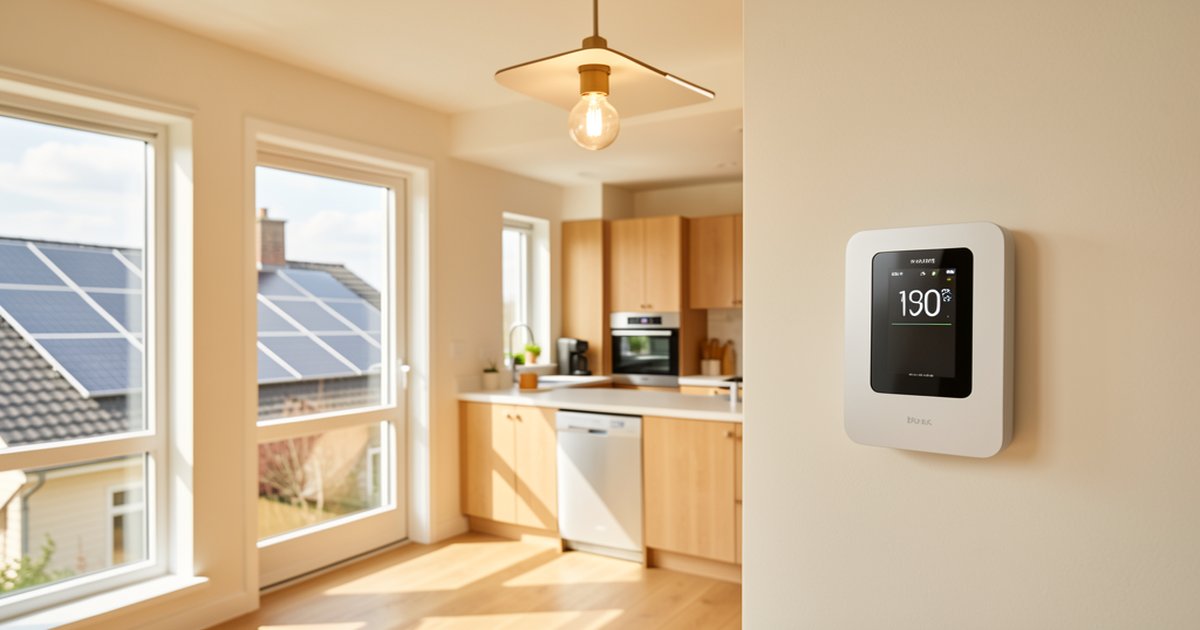
The average American household spends about $1,600-$2,200 per year on electricity, according to the U.S. Energy Information Administration. That number keeps rising—up 12-15% in many regions since 2023.
The good news: most households can cut their electricity bill by 15-30% with straightforward changes that don’t require major investments or lifestyle sacrifices. This guide covers the most effective strategies, organized from “do it today” quick wins to longer-term investments that pay for themselves.
Quick Wins: Free Changes You Can Make Today
1. Unplug “Vampire” Electronics
Annual Savings: $50-150 | Difficulty: Easy
Many electronics continue drawing power even when turned off. This “phantom load” or “vampire power” can account for 5-10% of your electricity bill.
Biggest Vampire Offenders
- Cable/satellite boxes (15-40 watts when “off”)
- Game consoles (1-15 watts in standby)
- Desktop computers and monitors (2-10 watts each)
- Phone and device chargers (0.1-0.5 watts each, but they add up)
- TVs (1-5 watts in standby)
What to Do
- Unplug chargers when not in use.
- Use smart power strips that cut power to peripherals when the main device is off.
- Enable “eco mode” or “auto power down” on devices that support it.
- For devices you can’t easily unplug, consider a Kill-A-Watt meter to identify the worst offenders.
2. Turn Off Lights When Leaving a Room
Annual Savings: $20-75 | Difficulty: Easy
It sounds obvious, but most of us are guilty of leaving lights on unnecessarily. If you have older incandescent bulbs, each 60-watt bulb left on for 8 hours costs about $0.12-0.15 per day. Over a year, that’s $40-50 per bulb.
LED vs. Incandescent Cost
A 60W incandescent uses about $50/year (8 hours/day). An equivalent 9W LED uses about $8/year. If you still have incandescents, switching to LEDs is the single highest-ROI energy upgrade you can make.
3. Use Natural Light Strategically
Annual Savings: $10-40 | Difficulty: Easy
Open curtains and blinds during daylight hours. Position desks, reading chairs, and workspaces near windows. Close curtains at night to retain heat (winter) or block heat gain (summer).
4. Air Dry Clothes and Dishes
Annual Savings: $50-100 | Difficulty: Easy
Clothes dryers are among the most energy-hungry appliances in your home (2,000-5,000 watts per cycle). Air drying on a clothesline or drying rack costs nothing.
For dishes, use your dishwasher’s “air dry” or “no heat dry” setting instead of the heated dry cycle. This alone can cut dishwasher energy use by 15-50%.
Low-Cost Upgrades ($10-100)
5. Switch to LED Bulbs
Annual Savings: $100-300 | Cost: $20-50 for a whole house | Difficulty: Easy
This is the single most cost-effective energy upgrade for most homes. LED bulbs use 75-80% less energy than incandescents and last 15-25 times longer.
Bulb Comparison
| Type | Watts | Annual Cost* | Lifespan |
|---|---|---|---|
| Incandescent | 60W | $50-65 | 1,000 hours |
| CFL | 13-15W | $12-18 | 8,000 hours |
| LED | 8-10W | $7-10 | 25,000-50,000 hours |
*Based on 8 hours/day usage at $0.15/kWh
Recommended LED Bulbs
Look for ENERGY STAR certified bulbs with a 2700K color temperature (warm white) for living spaces. Shop LED Bulbs on Amazon
6. Install a Programmable or Smart Thermostat
Annual Savings: $100-200 | Cost: $25-150 | Difficulty: Medium
Heating and cooling account for about 50% of home energy use. A programmable thermostat automatically adjusts temperature when you’re away or sleeping, eliminating waste.
Recommended Settings
- Winter: 68°F when home, 60-62°F when away or sleeping
- Summer: 78°F when home, 85°F when away
- Savings rule: Each degree of adjustment saves 1-3% on your bill
Smart Thermostats Worth Considering
Smart thermostats learn your schedule and can be controlled from your phone. Many pay for themselves within 6-12 months.
7. Use Power Strips for Electronics
Annual Savings: $30-100 | Cost: $15-30 | Difficulty: Easy
Group electronics on power strips and turn the strip off when devices aren’t in use. This is especially effective for entertainment centers, home offices, and charging stations.
Best Uses
- TV, soundbar, streaming box, game console ? one strip
- Computer, monitor, printer, speakers ? one strip
- Phone chargers, tablet chargers ? one strip
8. Seal Air Leaks
Annual Savings: $50-200 | Cost: $20-50 | Difficulty: Medium
Air leaks around doors, windows, and penetrations (pipes, wires, vents) can waste 10-30% of your heating and cooling energy. Weatherstripping and caulk are inexpensive and effective.
Where to Check
- Around doors and windows
- Where pipes and wires enter the house
- Electrical outlets on exterior walls
- Attic access hatches
- Recessed lighting
Quick Test
Hold a lit incense stick near suspected leaks on a windy day. If the smoke wavers, you’ve found a leak. Seal with appropriate caulk or weatherstripping.
9. Insulate Your Water Heater
Annual Savings: $20-45 | Cost: $20-30 | Difficulty: Easy
Water heaters are the second-largest energy expense in most homes. An insulation jacket reduces standby heat loss by 25-45%, especially for older units in unheated spaces.
How to Do It
- Purchase a water heater blanket/jacket from a hardware store.
- Turn off the water heater (or set to “vacation” mode).
- Wrap the blanket around the tank, leaving access to controls and the pressure relief valve.
- Secure with tape or straps (don’t use wire—it can damage the blanket).
Safety Note
Don’t insulate gas water heaters on top—this is a fire hazard. Only insulate the sides and bottom. For electric heaters, you can insulate the top as well.
Smart Home Solutions
10. Use Smart Plugs and Switches
Annual Savings: $50-150 | Cost: $15-30 per device | Difficulty: Easy
Smart plugs let you control any outlet from your phone or set schedules. They’re perfect for lamps, fans, space heaters, and other devices that get left on accidentally.
Best Uses
- Lamps in rooms where family members forget to turn them off
- Space heaters and fans (schedule on/off times)
- Coffee makers and other kitchen appliances
- Holiday lights (set automatic on/off schedules)
11. Install a Smart Water Heater Controller
Annual Savings: $50-100 | Cost: $80-150 | Difficulty: Medium
Devices like the Aquanta or EcoSmart let you control your water heater’s schedule and temperature remotely. Heat water only when you need it instead of maintaining temperature 24/7.
12. Use ENERGY STAR Appliances
Annual Savings: $50-200+ | Cost: Varies | Difficulty: Easy
When replacing appliances, choose ENERGY STAR certified models. They use 10-50% less energy than standard models, depending on the appliance.
Biggest Energy-Saving Appliance Upgrades
| Appliance | Energy Savings | Annual Savings |
|---|---|---|
| Refrigerator (old to new) | 40-50% | $50-100 |
| Washing Machine | 25-35% | $30-60 |
| Dishwasher | 10-20% | $15-30 |
| Dryer (heat pump model) | 40-60% | $50-100 |
Big-Impact Investments
13. Install Solar Panels
Annual Savings: $1,000-3,000+ | Cost: $15,000-30,000 (before incentives) | Difficulty: Professional Install
Solar panels are the biggest single investment you can make in reducing electricity costs. With the 30% federal tax credit (extended through 2032) and state incentives, the payback period is typically 6-10 years.
Key Considerations
- Roof condition and orientation (south-facing is ideal in the US)
- Shade from trees or buildings
- Local net metering policies
- Available tax credits and rebates
Learn More About Solar
Before investing, understand your options. Our guides cover everything from sizing to financing:
14. Add Insulation
Annual Savings: $200-600 | Cost: $1,000-3,000 | Difficulty: Professional or DIY
If your home was built before 1990, it’s likely under-insulated by modern standards. Adding insulation to the attic is the most cost-effective upgrade—most homes can add R-30 to R-49 attic insulation for $1,000-2,000.
Where to Insulate (Priority Order)
- Attic: Biggest impact, often DIY-friendly
- Walls: More expensive but significant in cold climates
- Crawlspace/basement: Often overlooked but important
15. Upgrade to a Heat Pump
Annual Savings: $500-1,500 | Cost: $3,000-8,000 | Difficulty: Professional Install
Heat pumps are 2-3x more efficient than traditional HVAC systems for heating and cooling. Modern cold-climate heat pumps work effectively down to -15°F, making them viable in most US regions.
Types of Heat Pumps
- Air-source: Most common, works in moderate to cold climates
- Mini-split: Ductless, great for additions or individual rooms
- Geothermal: Highest efficiency, highest upfront cost
Savings Comparison Table
Here’s a summary of all 15 strategies to help you prioritize:
| Strategy | Annual Savings | Upfront Cost | Payback Period | Difficulty |
|---|---|---|---|---|
| Unplug vampire electronics | $50-150 | $0-30 | Immediate | Easy |
| Turn off lights | $20-75 | $0 | Immediate | Easy |
| Use natural light | $10-40 | $0 | Immediate | Easy |
| Air dry clothes/dishes | $50-100 | $0-30 | Immediate | Easy |
| Switch to LED bulbs | $100-300 | $20-50 | 1-3 months | Easy |
| Smart thermostat | $100-200 | $25-150 | 2-6 months | Medium |
| Power strips | $30-100 | $15-30 | 2-4 months | Easy |
| Seal air leaks | $50-200 | $20-50 | 1-3 months | Medium |
| Water heater insulation | $20-45 | $20-30 | 6-12 months | Easy |
| Smart plugs | $50-150 | $15-30 each | 3-6 months | Easy |
| Smart water heater controller | $50-100 | $80-150 | 1-2 years | Medium |
| ENERGY STAR appliances | $50-200+ | Varies | 2-5 years | Easy |
| Solar panels | $1,000-3,000+ | $15,000-30,000 | 6-10 years | Professional |
| Add insulation | $200-600 | $1,000-3,000 | 3-6 years | Professional/DIY |
| Heat pump | $500-1,500 | $3,000-8,000 | 3-6 years | Professional |
Frequently Asked Questions
What uses the most electricity in a home?
Heating and cooling (40-50% of total), followed by water heating (14-18%), then appliances (10-15%). Lighting accounts for about 5-10% of most homes’ electricity use. Focusing on HVAC efficiency gives the biggest bang for your buck.
How much can I realistically save on my electricity bill?
With the free and low-cost changes in this guide, most households can reduce their bill by 15-30%. For a $150/month bill, that’s $22-45/month or $270-540/year. Bigger investments like solar panels or heat pumps can reduce bills by 50-100%.
Do smart plugs actually save electricity?
Yes, when used correctly. Smart plugs eliminate phantom load by completely cutting power to devices when they’re off. They also help you create schedules so devices aren’t running unnecessarily. The savings come from convenience—you’re more likely to turn things off when it’s automatic.
Is it worth replacing old appliances with ENERGY STAR models?
It depends on the appliance’s age. If your refrigerator is 15+ years old, replacing it can save $50-100/year. For newer appliances (under 10 years), the savings may not justify the replacement cost. Wait until the old appliance fails, then choose the most efficient model within your budget.
How do I know if my home needs more insulation?
If your home was built before 1990, it’s likely under-insulated. Signs include: uneven temperatures between rooms, high heating/cooling bills, ice dams on the roof in winter, and rooms that are too hot in summer or too cold in winter. A professional energy audit can give you specific recommendations.
Are solar panels worth it in my area?
Solar panels are worth it in most US regions, especially with the 30% federal tax credit. The best candidates have: south-facing roofs with minimal shade, local net metering policies, and electricity rates above $0.12/kWh. Use the AESV Sizing Calculator to estimate your potential savings based on your location and usage.
About the AESV Team
We research and test alternative energy solutions for homeowners. Our goal is to help you make informed decisions about solar, wind, and other renewable energy options. Learn more about our approach.
Get Our Free Solar Backup Checklist
Planning a solar setup? Download our free checklist to make sure you have everything you need for reliable backup power.
