
Editor’s Note: This page was originally published in 2018 and has been thoroughly updated for 2026 with current geothermal applications, loop options, installation considerations, and planning-cost data. Incentives and local requirements can change, so verify current eligibility and quotes before making a project decision.
What geothermal energy means
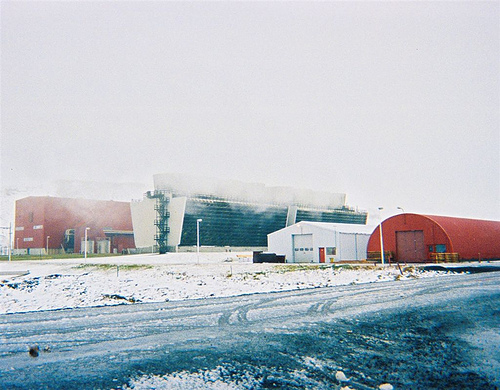
Geothermal energy is heat from the earth. Deep underground, that heat can be intense enough to produce steam or hot water for electricity generation. Near the surface, the ground also stays more stable in temperature than the outdoor air. Residential geothermal systems use that stable temperature to make heating and cooling more efficient.
This difference matters because many homeowners hear “geothermal” and picture a power plant. A normal residential geothermal system does not usually generate electricity. It is an HVAC system. It moves heat between your home and the ground using a ground loop, heat pump, pumps, refrigerant circuit, and ductwork or hydronic distribution.
If your goal is to make electricity, compare home solar panels and batteries. If your goal is efficient heating and cooling, geothermal heat pumps deserve a closer look.
Geothermal power plants vs residential geothermal heat pumps
| Type | What it does | Typical user | Homeowner takeaway |
|---|---|---|---|
| Utility-scale geothermal electricity | Uses underground steam or hot water resources to run turbines and generate electricity. | Utilities, developers, and large energy projects in suitable geothermal regions. | Important for the grid, but not something most homeowners can install in a backyard. |
| Residential geothermal heat pump | Moves heat between the home and the ground for efficient heating and cooling. | Homeowners, builders, and property owners with the right site and budget. | The practical residential option. It can reduce HVAC energy use, but installation planning matters. |
How geothermal heat pumps work
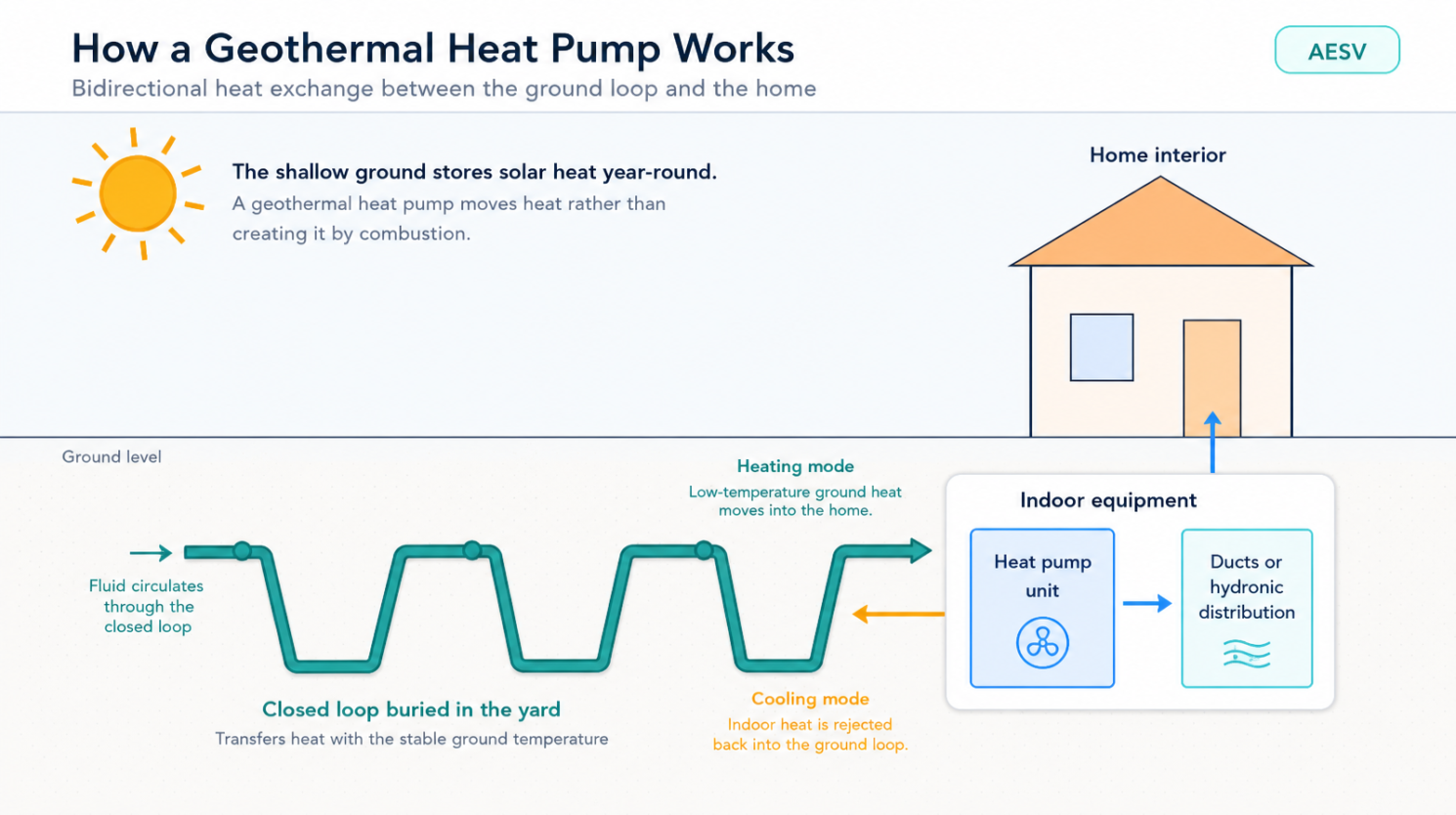
A geothermal heat pump, also called a ground-source heat pump, works like a regular heat pump but uses the ground as the heat source and heat sink instead of outdoor air. A loop of buried pipe circulates water or an antifreeze solution through the ground. The heat pump then transfers heat between that loop and the home.
Heating mode
In winter, the ground is usually warmer than cold outdoor air. The loop absorbs low-temperature heat from the earth and carries it to the heat pump. The heat pump concentrates that heat and sends it into the home through ducts, radiant floors, or another distribution system.
Cooling mode
In summer, the process reverses. The system pulls heat out of the house and sends it into the ground, which is typically cooler than the outdoor air. Because the system is not fighting extreme outdoor air temperatures in the same way an air-source unit does, it can operate very efficiently when designed and installed correctly.
Common geothermal loop types
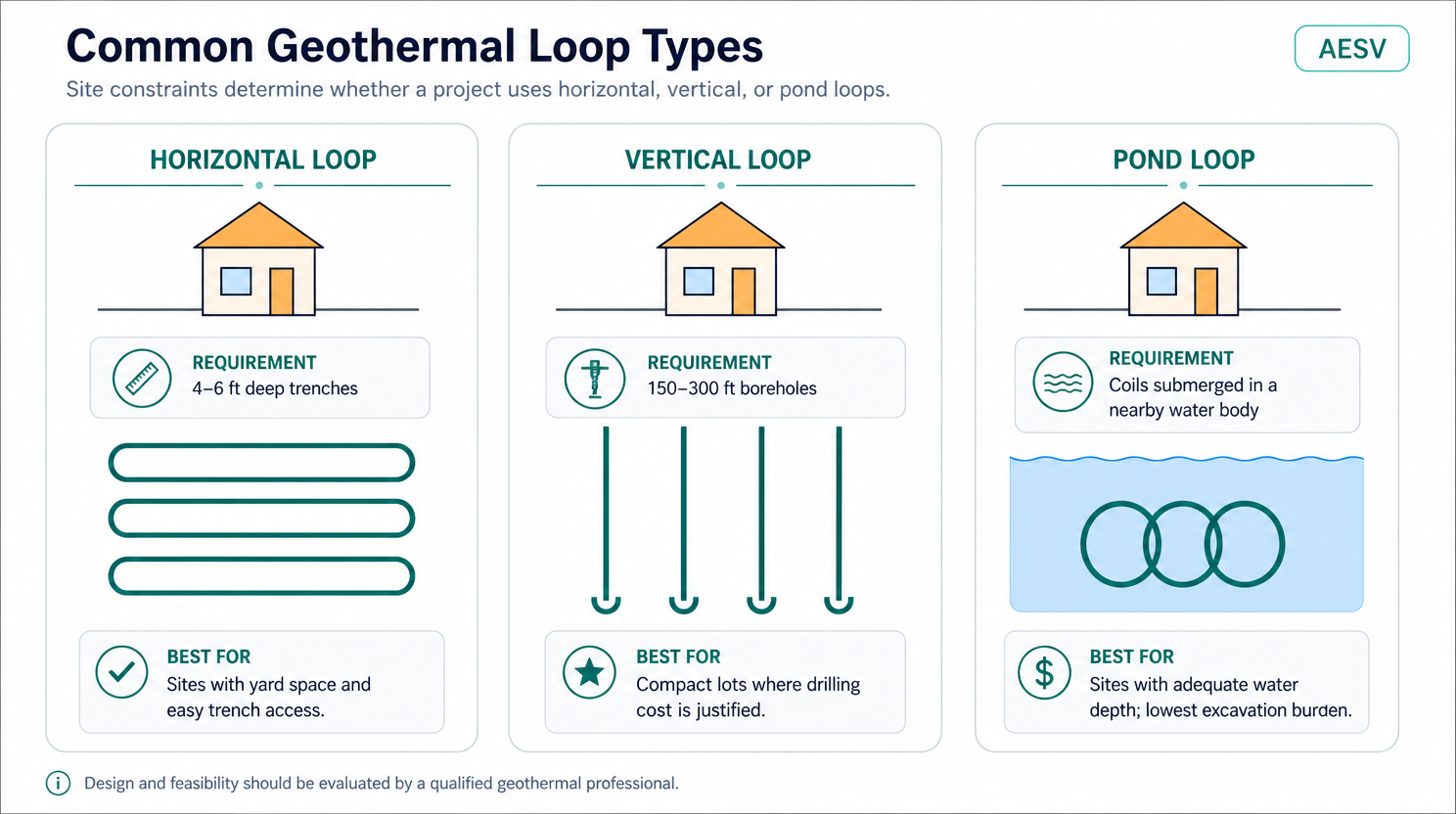
The ground loop is one of the biggest reasons geothermal projects vary in cost. The right loop depends on land, soil, rock, water availability, local rules, equipment sizing, and contractor experience.
| Loop type | How it works | Best fit | Planning note |
|---|---|---|---|
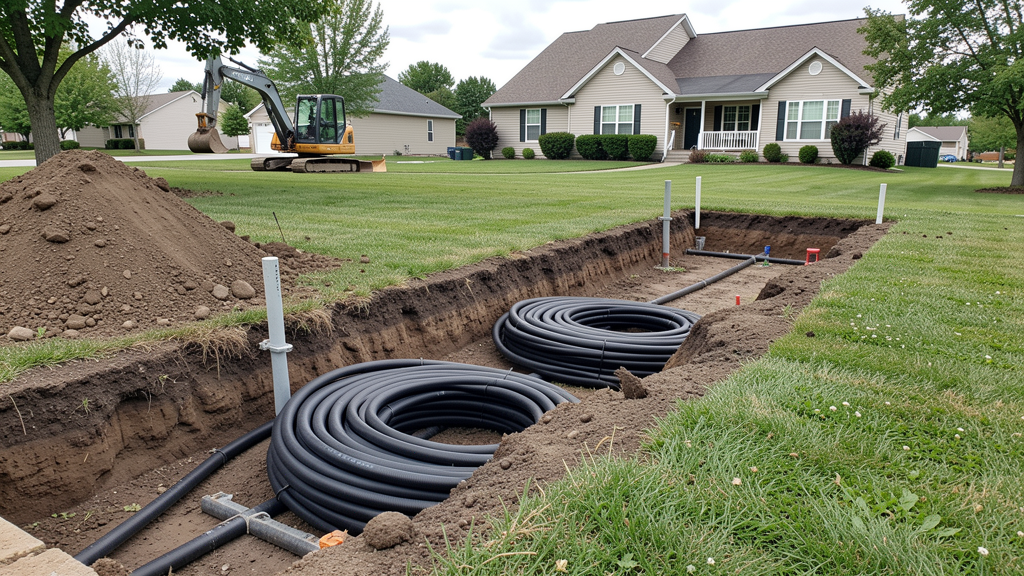
| Horizontal closed loop | Pipe is buried in trenches across a yard. | Properties with enough open land and workable soil. | Often less drilling-intensive, but requires yard space and excavation. |
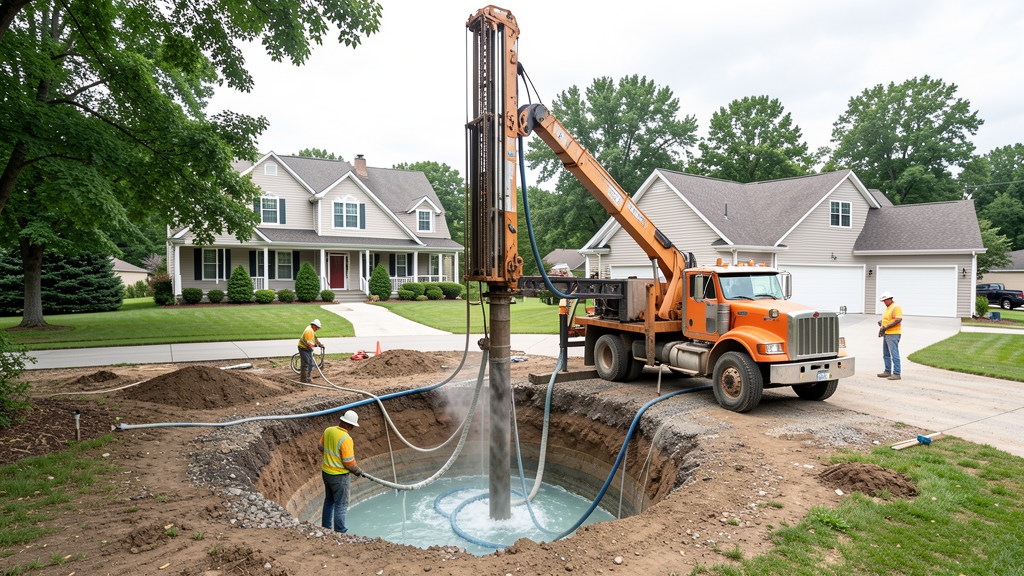
| Vertical closed loop | Pipe is installed in deep boreholes. | Smaller lots, existing homes, or sites without enough trench area. | Can work where land is limited, but drilling can be a major cost driver. |
| Pond or lake loop | Coils of pipe are placed in a suitable body of water. | Properties with an adequate pond or lake and allowed access. | Site-specific and subject to environmental and permitting requirements. |
| Open loop | Groundwater is pumped through the system and discharged according to local rules. | Sites with reliable water quantity and quality. | Requires careful review of wells, mineral content, discharge rules, and maintenance risk. |
Costs and payback factors
| Component | Broad planning range | What changes the number |
|---|---|---|
| Heat-pump unit | $4,000–$8,000 | Capacity, efficiency tier, brand, controls, and distribution needs. |
| Horizontal ground loop | $2,400–$4,000 | Trenching access, soil, land area, pipe length, and site restoration. |
| Vertical ground loop | $4,500–$8,000 | Drilling depth, geology, borehole count, access, and local drilling rates. |
| Pond or lake loop | $1,500–$3,000 | Water access, loop design, permits, anchoring, and environmental requirements. |
| Installation and connections | $5,000–$12,000 | Excavation or drilling, electrical work, ductwork or hydronics, commissioning, and cleanup. |
| Typical complete project | $15,000–$40,000 before incentives | Home size, load, loop type, geology, contractor pricing, and whether distribution work is needed. |
Planning note: These are broad U.S. planning ranges, not quotes. Actual costs vary substantially by home size, geology, labor market, loop design, and included HVAC work. Incentives and tax treatment also depend on current law, location, and eligibility; verify them with the relevant government program and a qualified installer.
For a more equipment- and installer-focused breakdown, see the Geothermal Heat Pumps Buyer’s Guide.
Geothermal heat pumps can be expensive upfront because they combine HVAC equipment with excavation or drilling. The final price depends on home size, load, loop type, soil or rock conditions, ductwork or hydronic needs, contractor pricing, permits, and incentives.
Payback is local. A geothermal system is more attractive when heating and cooling bills are high, the home is well suited for a ground loop, the existing HVAC system is due for replacement, and incentives reduce the net cost. It may be less attractive if the home has very low energy bills, major ductwork problems, difficult drilling conditions, or a short ownership timeline.
Do not evaluate geothermal only against the cheapest replacement furnace or air conditioner. Compare it against a realistic high-efficiency HVAC path: insulation and air sealing, an air-source heat pump, possible duct upgrades, utility rates, maintenance, and comfort goals.
Geothermal vs air-source heat pumps
Air-source heat pumps exchange heat with outdoor air. They are usually easier and cheaper to install than geothermal systems because they do not need a buried loop. Modern cold-climate models can work well in many regions.
Geothermal heat pumps exchange heat with the ground, where temperatures are more stable. That can improve efficiency and comfort, especially in climates with very hot summers or cold winters. The tradeoff is installation complexity. A poor loop design, bad sizing, weak ductwork, or inexperienced installation can erase much of the advantage.
In plain terms: air-source is often the simpler upgrade; geothermal is the deeper investment. Geothermal tends to make sense when the site is suitable, the owner plans to stay long term, and the contractor completes a proper load calculation.
Geothermal vs solar: different jobs, often complementary
Geothermal and solar are not direct substitutes. Solar panels generate electricity. A geothermal heat pump uses electricity to move heat efficiently. One produces energy; the other reduces the amount of energy needed for heating and cooling.
The strongest long-term plan is often efficiency first, then electrification, then clean electricity. That could mean air sealing, insulation, a right-sized heat pump, and then solar sized around the updated electric use.
If you are considering both, update your load estimate before sizing panels. Replacing fossil fuel heat with an electric heat pump may raise electric use while lowering total fuel use. Use the Solar Backup Calculator for critical-load backup planning, then read the Solar Battery Guide if outage protection is part of the plan.
Pros and cons of residential geothermal
Potential advantages
- Very efficient heating and cooling when properly designed.
- Stable performance because the ground temperature changes less than outdoor air.
- Lower outdoor noise compared with many conventional outdoor HVAC units.
- Long ground-loop life when installed correctly.
- Can pair well with solar panels for a more electric, lower-fuel home.
Potential drawbacks
- High upfront cost compared with many standard HVAC replacements.
- Drilling or excavation can be disruptive and site-dependent.
- Requires qualified design, load calculations, permits, and experienced installation.
- Not every lot has enough space, soil conditions, water access, or budget.
- Payback can be weak if energy prices are low or the homeowner moves soon.
Installation planning checklist
- Start with a load calculation. Do not size geothermal from square footage alone. A Manual J or equivalent load calculation should account for insulation, windows, air leakage, climate, and real heating and cooling needs.
- Improve the building shell first. Air sealing, insulation, duct sealing, and window issues can reduce the required system size.
- Get a site survey. The contractor should evaluate yard space, access for equipment, soil or rock conditions, water issues, and loop options.
- Check ductwork or hydronics. A great heat pump connected to poor distribution will not deliver great comfort.
- Confirm permits and local rules. Drilling, wells, discharge water, and environmental rules vary by location.
- Compare complete proposals. Ask what is included: loop field, heat pump, pumps, controls, ductwork, electrical work, permits, cleanup, warranty, and service.
- Check recognized training and local experience. Look for ground-source heat-pump training or credentials such as IGSHPA participation where applicable, plus completed projects using your proposed loop type.
- Ask for recent references. Contact homeowners with similar properties and ask about comfort, energy use, noise, repairs, and post-installation support.
- Require commissioning and support documentation. The final package should identify equipment, loop design, controls, warranty coverage, maintenance expectations, and performance checks.
When geothermal is worth it — and when it is not
Geothermal is worth serious consideration when you have high heating and cooling costs, a suitable site, a long ownership horizon, and a contractor with a clear design based on your home’s load. It can also be attractive during new construction or a major renovation.
It may not be the right first move if your home is leaky, your current HVAC system has years of life left, the site is difficult to drill or trench, or a modern air-source heat pump would solve the comfort problem at a much lower cost. In those cases, start with efficiency upgrades and compare the full numbers before committing.
Key geothermal takeaways
- Residential geothermal usually provides heating and cooling; it does not normally generate electricity.
- Horizontal, vertical, pond/lake, and open-loop designs solve the same heat-exchange problem in different site conditions.
- The loop field and installation conditions often matter more to total cost than the heat-pump cabinet alone.
- Compare geothermal with a properly sized air-source heat pump, efficiency upgrades, and the long-term ownership plan.
- Get a load calculation, site review, complete written proposal, and verified incentive information before signing.
Geothermal energy FAQ
Does residential geothermal generate electricity?
Usually no. A residential geothermal heat pump uses electricity to move heat between the home and the ground. Utility-scale geothermal power plants can generate electricity, but that is a different type of project.
Is geothermal better than a regular heat pump?
It depends on the home, climate, site, budget, and installer. Geothermal can be more efficient because it uses stable ground temperatures, but air-source heat pumps are usually cheaper and simpler to install.
How much land does a geothermal system need?
Horizontal loops need more open yard area. Vertical loops need less surface area but require drilling. Pond, lake, and open-loop systems are highly site-specific and depend on local rules and water conditions.
Can geothermal work with solar panels?
Yes. Solar panels can help supply the electricity used by a geothermal heat pump. If you add geothermal before solar, update your electric load estimate before sizing the solar system.
Does geothermal work during a power outage?
Not by itself. The heat pump, pumps, controls, and blower need electricity. If outage operation matters, plan a separate backup system with batteries, a generator, or another approved backup source.
Is geothermal worth it for an existing home?
Sometimes. It is most promising when HVAC costs are high, the site is suitable, the existing system is due for replacement, and the owner expects to stay long enough to benefit from lower operating costs.
What should I ask a geothermal contractor?
Ask for the load calculation, loop type, drilling or excavation plan, ductwork or hydronic review, permit requirements, included electrical work, warranty terms, maintenance expectations, and references for similar local projects.