
Editor’s Note: This comparison was originally published in 2019 and has been thoroughly rewritten for 2026 with current pricing, updated incentive information, and expanded coverage of hybrid systems. We have researched the latest solar and geothermal technology data to help you make an informed decision.
If you are weighing solar panels against a geothermal heat pump for your home, you are comparing two very different technologies that solve very different problems. Solar panels generate electricity. Geothermal heat pumps heat and cool your home. They do not compete — they complement each other.
This guide breaks down the real differences: what each technology does, what it costs, how long it takes to pay back, and which one makes sense for your situation. We also cover the growing trend of combining both systems for near-net-zero energy homes.
Quick Answer
Solar panels convert sunlight into electricity to power your home and reduce your electric bill. Geothermal heat pumps use the earth’s constant underground temperature to heat and cool your home with 300–500% efficiency. Solar addresses your electrical load; geothermal addresses your heating/cooling load. For most homeowners, solar delivers faster payback. For homes with high heating/cooling costs, geothermal can save more long-term. The best solution? Combine both.
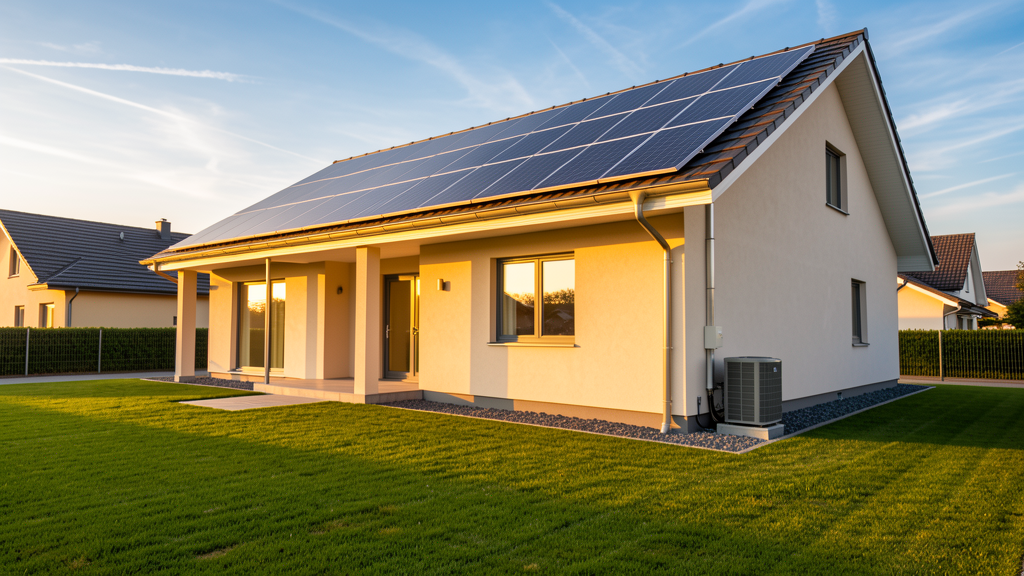
Solar Energy vs Geothermal Energy: Side-by-Side Comparison
Before diving into the details, here is a high-level comparison of the two technologies:
| Feature | Solar Panels (PV) | Geothermal Heat Pump |
|---|---|---|
| What it does | Generates electricity from sunlight | Heats and cools using underground temperature |
| Primary benefit | Reduces or eliminates electric bill | Reduces heating/cooling costs by 30–70% |
| Average cost (before incentives) | $15,000–$25,000 | $15,000–$40,000 |
| Federal tax credit | 30% through 2032 | 30% through 2032 |
| Net cost after credit | $10,500–$17,500 | $10,500–$28,000 |
| Typical payback period | 6–12 years | 5–10 years |
| Lifespan | 25–30 years (panels) | 20–25 years (unit), 50+ years (ground loop) |
| Maintenance | Very low (occasional cleaning) | Low (annual filter/inspection) |
| Works in winter? | Yes, but reduced output | Yes — excels in cold climates |
| Requires yard space? | No (roof-mounted) | Yes (for ground loop installation) |
| Can go off-grid? | Yes, with battery storage | No (needs electricity to run) |
| Increases home value? | Yes (avg. 4–6% increase) | Yes (avg. 3–5% increase) |
How Solar Panels Work
Solar photovoltaic (PV) panels convert sunlight directly into electricity. When photons from sunlight strike the silicon cells in a solar panel, they knock electrons loose, creating a flow of direct current (DC) electricity. An inverter converts this to alternating current (AC) that your home’s electrical panel can use.
A typical residential solar system includes:
- Solar panels — mounted on your roof or ground-mounted rack, typically 15–25 panels for a standard home
- Inverter — converts DC electricity to AC (string inverter or microinverters)
- Electrical panel connection — feeds power into your home’s circuits
- Net meter — tracks electricity sent back to the grid for credit
- Optional battery storage — stores excess energy for use during outages or at night
During daylight hours, your solar panels often produce more electricity than your home uses. With net metering, this excess flows to the grid and your utility credits your account. At night or on cloudy days, you draw from the grid (or from batteries if you have them). See our complete solar energy guide for more detail on how residential solar works.
How Geothermal Heat Pumps Work
Geothermal heat pumps (also called ground-source heat pumps) do not generate electricity — they use the earth’s constant underground temperature (45–75°F year-round at 4–6 feet depth) to heat and cool your home with remarkable efficiency.
The system has two main parts:
- Ground loop: A network of pipes buried underground (horizontally or vertically) filled with a water-antifreeze solution that circulates continuously.
- Indoor heat pump unit: A heat exchanger, compressor, and blower that extract heat from the circulating fluid (winter) or deposit heat into it (summer) and distribute conditioned air through your ductwork.
In winter, the fluid absorbs warmth from the ground and carries it indoors, where the heat pump concentrates it. In summer, the process reverses — heat is extracted from your home and deposited underground. Because the system only needs electricity to run the compressor and fans (not to generate heat), it delivers 3–5 units of heating or cooling for every 1 unit of electricity consumed.
For a complete buyer’s guide with cost breakdowns, installer selection criteria, and warranty details, see our Geothermal Heat Pumps Buyer’s Guide.
Cost Comparison: Solar vs Geothermal in 2026
Both technologies qualify for the 30% Residential Clean Energy Credit through 2032, but the total investment and payback timeline differ significantly:
Solar Panel Costs
| Component | Estimated Range | Notes |
|---|---|---|
| Panels (6–10 kW system) | $8,000–$15,000 | Depends on panel quality and wattage |
| Inverter | $1,000–$3,000 | String inverter vs microinverters |
| Installation labor | $3,000–$5,000 | Includes mounting, wiring, permits |
| Battery storage (optional) | $5,000–$15,000 | Tesla Powerwall, Enphase, etc. |
| Total (before incentives) | $15,000–$25,000 | Without battery |
| Federal tax credit (30%) | ?$4,500–?$7,500 | Applied at tax filing |
| Net after credit | $10,500–$17,500 | Typical 6–8 kW system |
Geothermal Heat Pump Costs
| Component | Estimated Range | Notes |
|---|---|---|
| Heat pump unit (3-ton) | $4,000–$8,000 | Varies by brand and efficiency tier |
| Ground loop | $2,400–$8,000 | Horizontal ($800/ton) or vertical ($1,500/ton) |
| Installation labor | $5,000–$12,000 | Includes excavation/drilling, electrical, ductwork |
| Ductwork (if needed) | $3,000–$8,000 | New construction or full HVAC replacement |
| Total (before incentives) | $15,000–$40,000 | Complete 3-ton residential system |
| Federal tax credit (30%) | ?$4,500–?$12,000 | Residential Clean Energy Credit |
| Net after credit | $10,500–$28,000 | Final cost to homeowner |
Bottom line on cost: Solar panels have a lower upfront cost and faster payback for most homes. Geothermal costs more upfront but delivers larger monthly savings on heating and cooling — and the ground loop lasts 50+ years, far longer than solar panels.
Which Saves You More Money?
The answer depends on your current energy costs:
| Your Situation | Better First Investment | Why |
|---|---|---|
| High electric bill, moderate heating/cooling | Solar panels | Solar directly reduces your largest utility cost |
| Moderate electric bill, high heating/cooling | Geothermal heat pump | Geothermal cuts 30–70% off HVAC costs |
| High electric AND high heating/cooling | Solar first, then geothermal | Solar payback funds the geothermal investment |
| Off-grid or unreliable grid | Solar + battery | Geothermal needs grid electricity to operate |
| New construction | Both simultaneously | Installation costs are lower when done together |
Use our Solar Backup Calculator to estimate your solar system size and potential savings. For geothermal-specific payback calculations, consult an IGSHPA-certified installer who can assess your property’s geology and heating load.
Can You Combine Solar and Geothermal?
Yes — and this is the fastest-growing trend in residential renewable energy. A combined solar-plus-geothermal system creates what the industry calls a “net-zero energy home”:
- Geothermal handles heating and cooling with 300–500% efficiency, dramatically reducing your electricity demand for HVAC
- Solar panels generate the electricity to run the geothermal heat pump, plus power your lights, appliances, and other loads
- The result: Your home produces as much energy as it consumes annually, potentially eliminating both your gas/oil bill AND your electric bill
The economics work because geothermal reduces the amount of electricity you need (smaller solar array required), and solar eliminates the remaining electric cost of running the heat pump. Homeowners who combine both systems typically see 60–80% total energy cost reduction.
If you are building new, installing both systems during construction is significantly cheaper than retrofitting later — the ground loop can be installed before landscaping, and solar can be integrated into the roof design.
Solar vs Geothermal: Pros and Cons
Solar Panels
Pros
- Lower upfront cost ($15K–$25K)
- Faster payback (6–12 years)
- Works on any roof with adequate sun
- Can go off-grid with batteries
- Low maintenance
- 25–30 year panel lifespan
Cons
- Output drops on cloudy days and in winter
- Does not provide heating or cooling
- Panels degrade ~0.5% per year
- May need roof replacement first if old
- Some HOAs restrict panel placement
- Inverter may need replacement at 10–15 years
Geothermal Heat Pumps
Pros
- 300–500% heating/cooling efficiency
- Works in any climate, any season
- Ground loop lasts 50+ years
- No outdoor unit (quiet, no visual clutter)
- Low maintenance
- Provides heating, cooling, AND hot water
Cons
- Higher upfront cost ($15K–$40K)
- Requires yard space for ground loop
- Needs electricity to operate (not off-grid)
- Installation is disruptive (drilling/excavation)
- Not all properties have suitable geology
- Fewer qualified installers than solar
Geographic and Property Considerations
Not every technology works equally well on every property. Here is what to evaluate:
Solar Panels
- Best for: South-facing roofs with minimal shade, or ground-mounted arrays on open land
- Climate: Works in all climates — even cloudy northern states get enough sun for reasonable payback. Germany, with less sunshine than Alaska, is one of the world’s top solar producers
- Roof condition: Roof should have 15+ years of life remaining. If you need a new roof, do that first
- HOA restrictions: Most states have solar access laws that limit HOA restrictions, but check local rules
Geothermal Heat Pumps
- Best for: Properties with adequate land (horizontal) or standard suburban lots (vertical)
- Climate: Works in all climates — excels in extreme cold where air-source heat pumps struggle
- Soil/rock: Soil composition affects installation cost. Rocky soil increases drilling costs; sandy soil is easier
- Pond/lake: If your property has a suitable water body, pond loops are the cheapest option
- Existing homes: Vertical loops work for retrofits with minimal surface disruption
Frequently Asked Questions
Is solar or geothermal better for saving money?
For most homeowners, solar panels deliver faster payback because they directly reduce your electric bill — often the largest single utility cost. Geothermal delivers larger percentage savings on heating and cooling but costs more upfront. If your heating bills are very high (propane, fuel oil, or electric resistance heat), geothermal may pay back faster. The best long-term strategy for high-energy homes is combining both.
Can I install solar panels and a geothermal system at the same time?
Yes, and it is cheaper to do both during new construction. The ground loop installation and solar mounting can be coordinated, and you only need one set of electrical permits and inspections. Both qualify for the 30% federal tax credit separately, so you can claim the credit on the full cost of each system.
Do solar panels work with geothermal heat pumps?
They work exceptionally well together. Geothermal heat pumps are the most efficient HVAC system available, but they still need electricity to run. Solar panels generate that electricity from sunlight. Together, they can reduce your total home energy costs by 60–80% or more, and potentially bring your net energy consumption to zero.
Which is more reliable — solar or geothermal?
Both are highly reliable. Solar panels have no moving parts and typically come with 25-year performance warranties. Geothermal heat pump units last 20–25 years, and the underground loop — the most expensive component — lasts 50+ years. Many geothermal systems installed in the 1980s are still operating today. Neither depends on fuel deliveries or price fluctuations.
Does solar or geothermal increase home value more?
Research suggests solar panels increase home value by an average of 4–6%, while geothermal systems increase value by 3–5%. However, the combined effect of both systems may be greater than either alone, as buyers increasingly value energy-efficient, low-utility-cost homes. See our guide on how geothermal increases home market value for more detail.
What about maintenance costs?
Solar panels require almost no maintenance — occasional cleaning and annual inspection is sufficient. Geothermal systems need annual filter changes, coil cleaning, and refrigerant checks, but the ground loop itself requires zero maintenance. Both systems have significantly lower maintenance costs than fossil fuel heating systems.
Is solar or geothermal better for the environment?
Both are excellent for reducing carbon emissions. Solar panels displace grid electricity (which still includes fossil fuel generation in most areas), while geothermal heat pumps eliminate the need for natural gas, propane, or fuel oil for heating. A home that combines both systems can reduce its carbon footprint by 70–90% compared to a conventional home. Neither produces direct emissions during operation.
What is the installation timeline for each?
Solar panel installation typically takes 1–3 days once permits are approved (permitting can take 2–6 weeks depending on your municipality). Geothermal installation takes 2–5 days for the ground loop and indoor unit, but the full process — including site assessment, design, permitting, and excavation — can take 4–8 weeks. If you are installing both, coordinate timelines to minimize disruption and reduce overall project costs.
The Bottom Line: Which Should You Choose?
Decision Guide
- Choose solar first if: Your electric bill is your biggest energy cost, you want the fastest payback, or you want the option to go off-grid with batteries.
- Choose geothermal first if: Your heating/cooling costs dominate your utility bills, you use propane or fuel oil, or you are building new and can install the ground loop easily.
- Choose both if: You want to eliminate virtually all energy costs, you are building a new home, or you plan to stay in your home for 15+ years and want maximum long-term savings.
Both solar and geothermal are proven, reliable technologies backed by decades of real-world performance and strong federal incentives. The right choice depends on your energy bills, property characteristics, climate, and how long you plan to stay in your home.
For next steps:
- Estimate your solar system size with our Solar Backup Calculator
- Read our Geothermal Heat Pumps Buyer’s Guide for cost details and installer selection
- Explore Solar Energy for Homes for a complete solar overview
- See Alternative Energy Sources for Homes to compare all options
Last updated: July 2026. We research and update our guides regularly. Cost figures are estimates based on U.S. Department of Energy data and industry averages as of mid-2026. Always obtain multiple quotes from certified installers before making a purchase decision.
