
Home solar guide · 2026
Solar energy is one of the most practical renewable options for homeowners, but the right system is not just a pile of panels on the roof. A good solar plan matches your electric use, roof, utility rules, backup needs, budget, and long-term maintenance expectations.
Use the Solar Backup Calculator Plan battery backup
What solar energy is, in plain English
Solar energy is energy from the sun that can be turned into useful heat or electricity. For most homeowners, “going solar” means installing photovoltaic solar panels, often called PV panels, that convert sunlight into electricity for the home.
A residential solar system can lower electric bills, reduce dependence on utility power, and, when paired with the right battery equipment, keep selected circuits running during outages. It is not magic and it is not automatically the best investment for every house. The value depends on your local sun exposure, electric rate, utility credit rules, roof condition, incentives, installation cost, and whether backup power matters to you.
The best first step is not buying equipment. It is understanding how much electricity your home uses and what problem you want solar to solve: lower bills, cleaner power, outage backup, off-grid living, or a mix of those goals.
How solar panels work
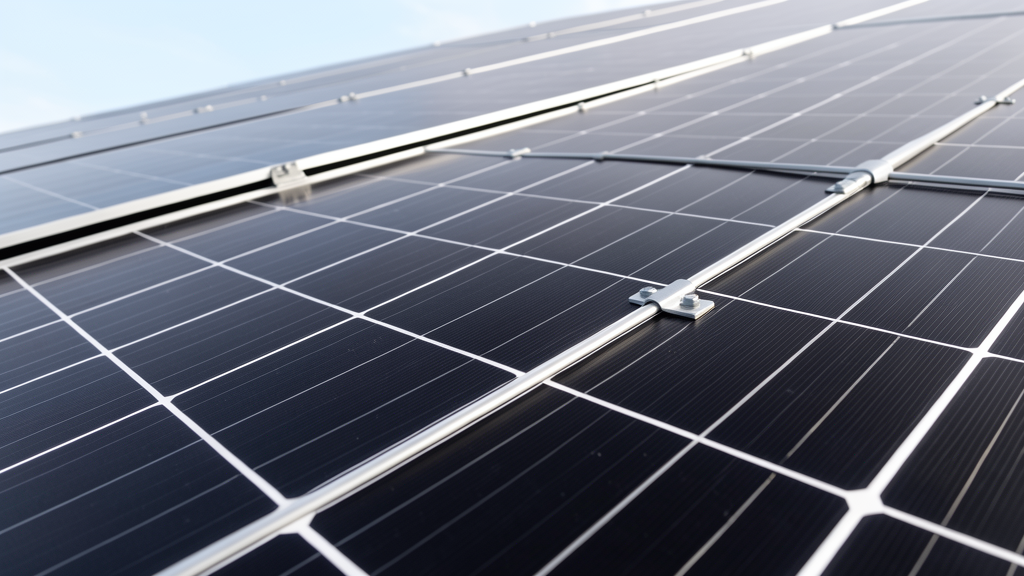
Solar panels are made from photovoltaic cells. When sunlight hits those cells, photons from the light knock electrons loose inside the material. That movement creates direct current electricity, usually shortened to DC.
Your home, however, mainly uses alternating current electricity, or AC. That is why a solar system needs an inverter. The inverter converts DC electricity from the panels into AC electricity that can be used by your appliances, lights, outlets, heat pump, well pump, refrigerator, and other loads.
A modern system also includes monitoring. Monitoring lets you see how much energy the panels produce, how much the home consumes, whether the battery is charging, and whether any equipment needs attention. It is not just a nice dashboard. Good monitoring can reveal shading problems, failed components, breaker trips, or unusual energy use before they become expensive surprises.
During sunny hours, solar power can serve your home first. Depending on your system and utility rules, extra production may charge a battery, export to the grid for credit, or be limited by the inverter. At night or during cloudy periods, your home pulls from the grid, the battery, or both.
Solar PV vs solar thermal
Solar PV and solar thermal both use the sun, but they do different jobs.
| Solar type | What it produces | Common home use | Planning note |
|---|---|---|---|
| Solar photovoltaic (PV) | Electricity | Powering home loads, charging batteries, exporting to grid | The default choice for most homeowners comparing rooftop solar options. |
| Solar thermal | Heat | Water heating, pool heating, some space-heating support | Useful in the right climate and application, but less flexible than electricity. |
If your goal is to lower electric bills or prepare for battery backup, you are usually looking at solar PV. If your goal is heating water or a pool, solar thermal may be worth comparing against heat-pump water heaters, efficient pool covers, and electric options powered by PV.
Main home solar system types
Grid-tied solar
A grid-tied solar system connects to your utility service. It is usually the simplest and least expensive residential solar setup because it does not require batteries. Solar offsets your daytime use, and extra production may be credited by the utility depending on local net metering or export rules.
The important limitation is outage behavior. Most grid-tied solar systems shut down when the grid goes down. This protects utility workers and prevents unsafe backfeeding. If you want power during outages, ask specifically about battery backup or approved backup-capable equipment.
Hybrid solar + battery
A hybrid system combines solar panels with one or more batteries. During normal operation, the battery may store extra solar energy for evening use, time-of-use savings, or backup readiness. During an outage, the battery can power selected loads through a backed-up subpanel or whole-home backup setup, depending on design.
Hybrid systems cost more and require better planning. You need to know which loads matter, how long they must run, and how the battery will recharge if the outage lasts longer than one night.
Off-grid solar
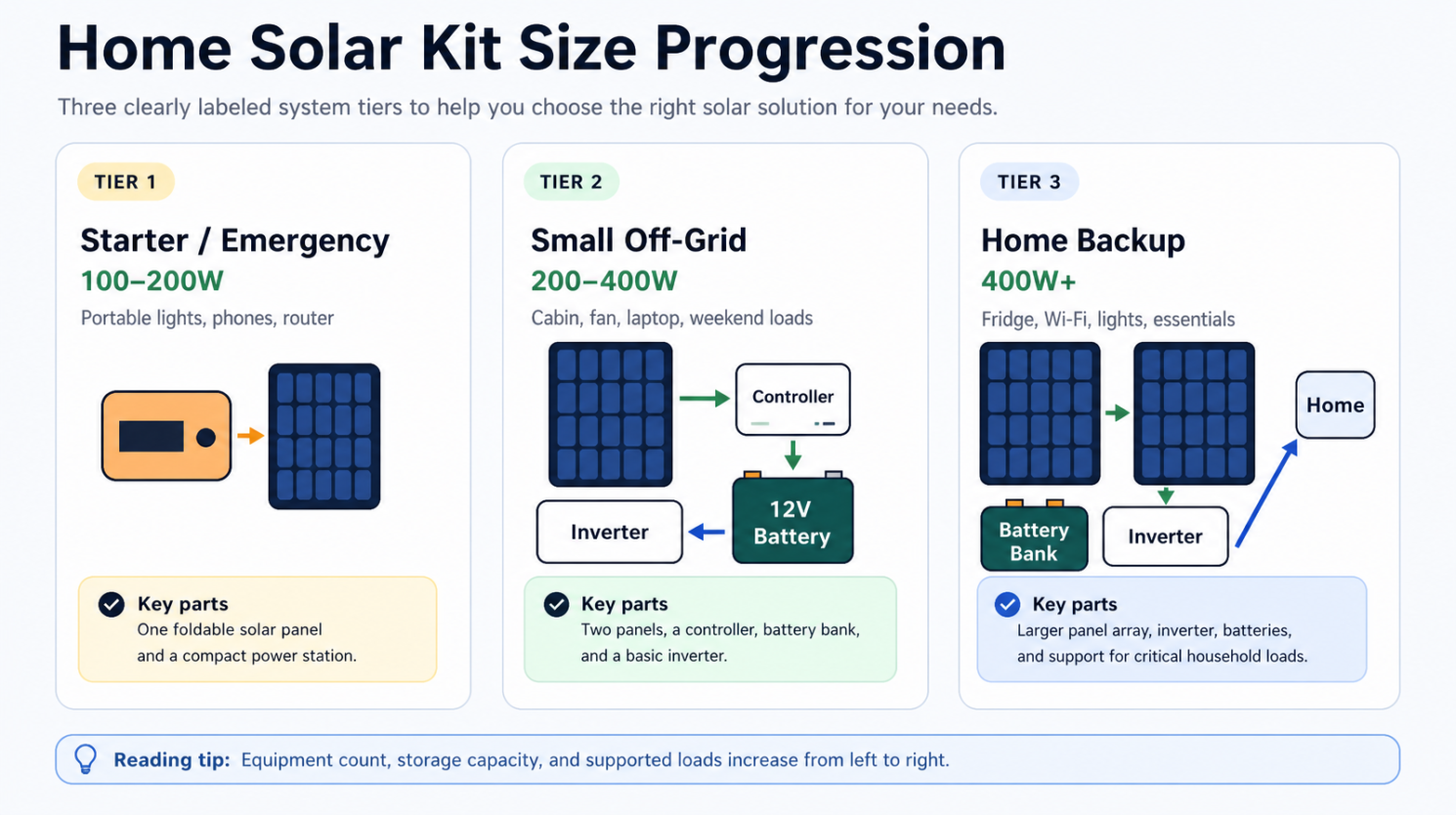
Off-grid solar is built for cabins, remote properties, RVs, workshops, and homes without a utility connection. It requires more careful sizing because there is no grid to rescue an undersized design. Off-grid systems often need larger battery banks, backup generators, conservative load planning, and equipment designed for repeated deep cycling.
Core components in a home solar system
| Component | What it does | What to check before buying |
|---|---|---|
| Solar panels | Generate DC electricity from sunlight. | Roof space, shade, wattage, efficiency, warranty, and layout. |
| Inverter | Converts DC power to AC power for home use. | String inverter, microinverters, optimizers, or hybrid inverter depending on roof and battery goals. |
| Racking and attachments | Secure panels to the roof or ground mount. | Roof type, flashing quality, wind rating, waterproofing, and local code. |
| Electrical panel and interconnection | Connects solar equipment safely to the home and utility. | Panel capacity, breaker space, service upgrades, permits, inspections, and utility approval. |
| Monitoring | Tracks production, consumption, battery status, and alerts. | App quality, consumption monitoring, installer access, and long-term support. |
| Batteries | Store energy for backup or evening use. | Usable capacity, output power, backed-up loads, warranty, location, and expansion options. |
Sizing basics: what determines the right system size?
Solar sizing starts with your electric use, not your roof. Pull 12 months of electric bills and look for annual kilowatt-hours, usually shown as kWh. A home using 9,000 kWh per year needs a different system than a home using 18,000 kWh per year, even if the roofs look similar.
Next, look at roof space and roof quality. South-facing roof sections often produce well in the northern hemisphere, but east and west roofs can still be useful, especially when electricity is expensive during afternoon and evening hours. A roof near the end of its life should usually be repaired or replaced before solar is installed. Removing and reinstalling panels later adds cost.
Peak sun hours matter too. This is not the number of daylight hours. It is a way of estimating how much strong sunlight your location receives in an average day. A system in a sunny, open location can produce more energy than the same system on a shaded or cloudy site.
Shading deserves serious attention. A chimney, dormer, nearby tree, or neighboring building can reduce production. Microinverters or optimizers can help with complicated roofs, but they do not make shade disappear. If a roof is heavily shaded, improving efficiency or using a different energy strategy may be better than forcing a weak solar layout.
Battery sizing is a separate calculation. A solar array sized for annual bill savings does not automatically provide the battery capacity needed for outage backup. For backup, list critical loads such as refrigerator, freezer, internet, lights, medical equipment, well pump, sump pump, and selected outlets. Then use the Solar Backup Calculator to estimate battery capacity and inverter output before you compare battery packages.
Costs and payback factors
Solar payback is local. Two similar homes can have very different results because electric rates, utility credits, incentives, financing terms, roof conditions, and installation prices vary by area.
The biggest factors are your current electricity rate, how much solar energy you can use or credit, and the installed cost after available incentives. Strong net metering can improve the economics of grid-tied solar. Weaker export credits may make batteries or load shifting more important, but batteries also add cost.
Financing can change the picture. A low advertised monthly payment may hide dealer fees, escalators, or a long repayment period. Cash purchases, conventional loans, leases, and power purchase agreements can all be valid in certain situations, but they are not equal. Read the contract, understand who owns the system, and ask what happens if you sell the home.
Also include roof work, electrical panel upgrades, tree trimming, permits, inspection costs, and future maintenance in the decision. A cheap quote that ignores these items is not really cheap.
When solar is worth it — and when it is not
Solar is often worth considering when:
- Your electric bills are high and you expect to stay in the home long enough to benefit.
- Your roof has good sun exposure, enough usable space, and a reasonable remaining life.
- Your utility offers fair solar credits or your home can use much of the daytime production.
- You want a cleaner energy source with relatively low day-to-day maintenance.
- You are already planning electrification, such as an EV, heat pump, or induction cooking.
Solar may not be the first move when:
- The roof is old, shaded, structurally questionable, or too small for a useful array.
- Your utility has poor export rules and batteries are not in the budget.
- You plan to move soon and the financing structure could complicate the sale.
- Your home wastes energy through poor insulation, inefficient HVAC, or unmanaged loads.
- You need outage backup immediately and a portable option would solve the short-term need better.
Common solar planning mistakes
- Buying hardware before sizing the system. Panels, batteries, inverters, and charge controllers should match the load plan, not the other way around.
- Ignoring shade. A few hours of shade in the wrong place can reduce production enough to change the economics.
- Assuming solar works during every outage. Standard grid-tied solar usually shuts down unless backup equipment is included.
- Undersizing the inverter or battery. A battery may have enough energy capacity but not enough power output to start a pump, microwave, or HVAC load.
- Skipping utility rules. Interconnection approval, export rates, system size limits, and inspection requirements can affect the final design.
- Forgetting future loads. An EV, heat pump, pool pump, workshop, or addition can change annual electricity use.
Solar + battery backup: what to know first
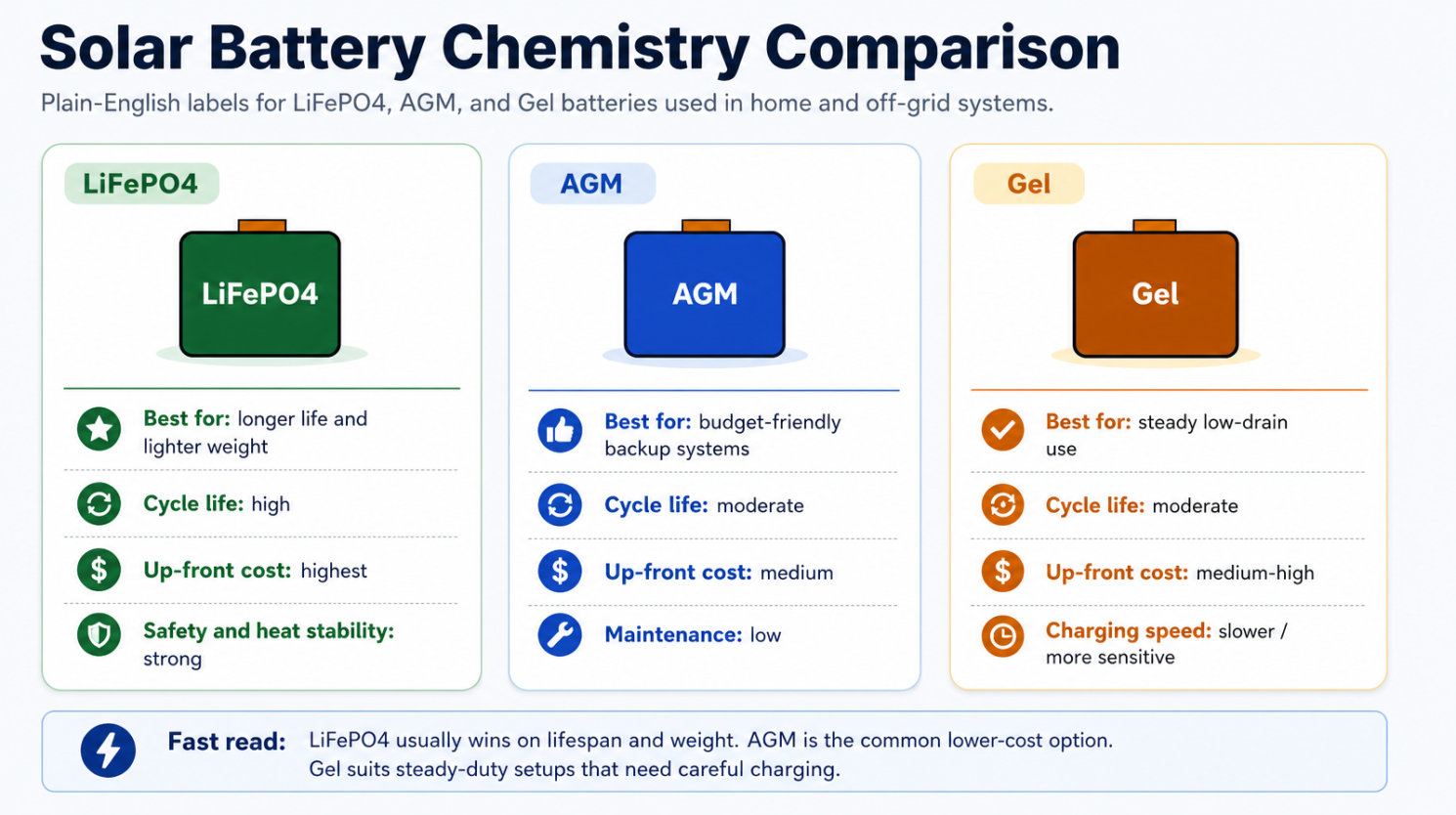
Batteries are useful, but they should be sized around real outage goals. Whole-home backup is convenient, yet it can require multiple batteries and careful load management. Critical-load backup is often more practical: refrigerator, freezer, lights, internet, outlets, medical equipment, and maybe a well or sump pump.
Before buying a battery, decide what must run, how many hours it must run, and whether solar can recharge it during a long outage. Large heating, air conditioning, electric ovens, dryers, and water heaters can drain batteries quickly. That does not mean backup is impossible, but it does mean the design needs honest math.
For the next step, read the Solar Battery Guide and run your critical loads through the Solar Backup Calculator. If you only need simple outage power for phones, internet, lights, and a refrigerator, compare portable options in the solar-powered generators guide before committing to a full home installation.
Solar energy FAQ
How many solar panels does a house need?
It depends on annual kWh usage, panel wattage, roof production, shading, and how much of your bill you want to offset. Start with 12 months of electric bills, then compare that usage with estimates from qualified installers or a solar sizing tool.
Do solar panels work during a power outage?
Most standard grid-tied solar systems shut down during an outage for safety. To keep power on during outages, the system usually needs battery backup or approved backup equipment that can safely isolate from the grid.
Are solar batteries required?
No. Many homeowners install grid-tied solar without batteries. Batteries become more important when you want outage backup, time-of-use savings, or more control over when your solar energy is used.
What is the difference between a solar inverter and a charge controller?
An inverter converts DC electricity into AC electricity for home use. A charge controller manages how solar panels charge batteries, especially in off-grid, RV, cabin, and smaller battery-based systems.
Is solar worth it if my roof faces east or west?
Often, yes. South-facing roofs commonly produce the most annual energy in the northern hemisphere, but east and west roofs can still perform well. The answer depends on shade, roof pitch, local rates, and when your home uses electricity.
Should I replace my roof before installing solar?
If the roof is near the end of its useful life, replacing it before solar is usually smarter. Removing and reinstalling panels later can be expensive and may interrupt production.
Can I install solar myself?
Small off-grid systems are often DIY-friendly for experienced homeowners, but grid-connected rooftop systems involve permits, electrical code, utility approval, fall risk, and inspections. If you are not qualified for electrical work, use a licensed professional.
